Answered by Esther Estrada, Esq.
California Licensed Attorney | 5-Time Southern California Super Lawyers Rising Start (Top 2.5%)
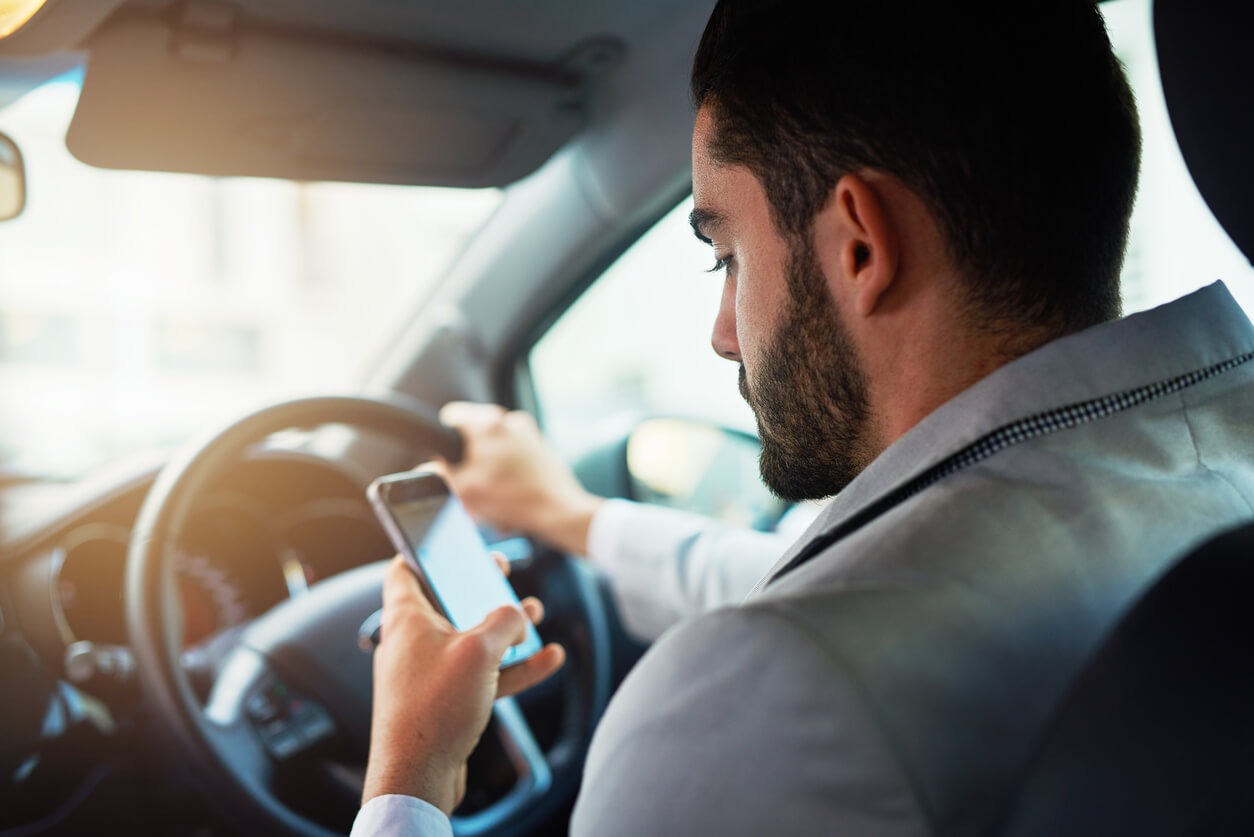
Distracted driving has been one of the leading causes of car accidents in California for years. While many drivers think they understand the rules around cell phone use, a major change took effect in 2025 that is catching people off guard. California’s new hands-free “no touch” phone law significantly expands what is considered illegal phone use while driving, even when a driver believes they are being careful.
If you drive anywhere in California, especially in busy areas like Los Angeles, Riverside, or Orange County, this law directly affects you. More importantly, it can impact fault, liability, and insurance claims if you are involved in an accident.
This guide explains what the new law actually says, why it exists, how it changes enforcement, and what it means for drivers who are injured or accused of causing a crash.
Why California expanded its distracted driving laws
California has long banned handheld phone use while driving, but enforcement was inconsistent and loopholes were common. Drivers often argued that they were not texting, just checking directions or briefly touching their phone. Others claimed their phone was mounted, so the law did not apply.
Despite existing laws, distracted driving crashes continued to rise. Studies showed that even brief interaction with a phone, including tapping a screen or adjusting a GPS route, significantly increases reaction time and crash risk.
In response, lawmakers passed a stricter rule designed to remove gray areas and reduce excuses. The goal of the new law is simple: keep drivers’ hands off their phones entirely while driving.
What the 2025 “no touch” phone law actually says
Under California’s updated hands-free law, drivers are prohibited from physically holding or touching a phone while operating a vehicle, regardless of what the phone is being used for.
This means drivers may not:
- Hold a phone in their hand
- Tap or swipe the screen
- Pick up the phone to check notifications
- Adjust music or podcasts on the device
- Enter or change GPS directions while driving
- Scroll through messages, emails, or apps
Even if the phone is mounted, the law restricts interaction. Drivers may only use voice-activated features that do not require touching the device.
In short, if your hand touches your phone while the vehicle is in motion or stopped in traffic, you may be violating the law.
What is still allowed under the new law
The law does not ban phones entirely. Drivers may still use hands-free technology in limited ways.
Allowed use includes:
- Voice-activated navigation
- Voice-controlled calls
- Voice-controlled music selection
- One-touch activation of a hands-free function when the vehicle is fully stopped
However, even these exceptions are narrow. Law enforcement officers are being trained to closely evaluate whether a driver’s interaction truly qualifies as hands-free.
Why “I was just checking directions” is no longer a defense
One of the most common explanations drivers give after an accident is that they were only looking at their GPS. Under the new law, this explanation is unlikely to help.
Touching your phone to check directions, reroute traffic, or zoom in on a map can now be considered an illegal distraction. If a crash occurs during that moment, the phone use may be cited as negligent behavior.
This matters because negligence plays a major role in personal injury cases. A simple traffic citation can quickly turn into evidence used by insurance companies to shift blame.
How the new law affects fault in car accidents
California follows a comparative negligence system, meaning fault can be shared between parties. The new hands-free law gives insurers and defense attorneys another tool to assign fault to drivers.
If you are involved in an accident and evidence shows you touched your phone, even briefly, insurers may argue that:
- You were distracted
- You violated the traffic law
- Your distraction contributed to the collision
This can reduce your compensation or increase your liability, even if the other driver also made mistakes.
How police determine phone use after an accident
Many drivers assume that unless they were pulled over while holding their phone, there is no proof. That assumption is often wrong.
After an accident, phone use may be examined through:
- Witness statements
- Traffic camera footage
- Vehicle dash cams
- Phone records
- App usage logs
- GPS data
- Driver admissions at the scene
Even casually saying “I was checking my GPS” can later be used to support a distracted driving claim.
Penalties for violating the no touch law
The penalties for violating the law depend on the number of offenses and the circumstances.
Consequences may include:
- Traffic citations and fines
- Points on your driving record
- Increased insurance premiums
- Use of the violation as evidence in a civil lawsuit
If distracted driving causes injury, the consequences can escalate quickly, especially when combined with other violations like speeding or failure to yield.
Why the law matters even if no ticket was issued
Many people believe that if they were not cited at the scene, the law does not matter. In civil injury cases, that is not true.
Insurance companies do not need a ticket to argue distraction. They only need enough evidence to suggest that phone use contributed to the crash.
This is why understanding the law is critical for both drivers who are injured and drivers who may be accused of causing an accident.
Common accident scenarios involving phone distraction
Since the new law took effect, attorneys are seeing similar patterns in distracted driving cases.
Common scenarios include:
- Rear-end collisions caused by delayed braking
- Pedestrians struck in crosswalks
- Side-impact crashes at intersections
- Parking lot accidents
- Cyclists hit when drivers fail to check blind spots
In many of these cases, drivers believed their phone use was minimal or harmless.
What injured victims should know
If you were injured by a distracted driver, the new law strengthens your case. A violation can support claims of negligence and increase the likelihood of fair compensation.
You may be entitled to recover damages for:
- Medical expenses
- Future medical treatment
- Lost wages
- Reduced earning capacity
- Pain and suffering
- Emotional distress
Evidence of illegal phone use can significantly impact settlement negotiations and trial outcomes.
What drivers accused of distraction should do
If you are accused of causing an accident due to phone use, do not assume the situation is straightforward.
Steps to take include:
- Avoid making statements without legal advice
- Do not speculate about phone use
- Preserve your phone records
- Contact an attorney promptly
Even a small misunderstanding can turn into a major liability issue if not handled properly.
Why insurance companies focus heavily on phone use
Distracted driving is one of the easiest arguments insurers can use to reduce payouts. The new law gives them more leverage.
Insurance adjusters often look for:
- Any admission of phone use
- Gaps in attention
- Conflicting statements
- Data that suggests screen interaction
This is why legal representation matters, even in cases that initially seem simple.
How Estrada Law Group approaches distracted driving cases
At Estrada Law Group, we understand how quickly a phone-related allegation can affect a case. Our team focuses on facts, evidence, and context.
We work to:
- Analyze accident data and timelines
- Review phone and vehicle records
- Challenge assumptions about distraction
- Identify all responsible parties
- Protect clients from unfair blame
Whether you were injured or are defending against a distracted driving claim, strategy matters.
Practical tips for drivers moving forward
The safest approach under the new law is to remove temptation entirely.
Helpful habits include:
- Set GPS before driving
- Use voice commands only
- Silence notifications
- Pull over safely if adjustments are needed
- Treat your phone like it is off limits while driving
These steps protect both your safety and your legal position.
Conclusion
California’s new hands-free “no touch” phone law for 2025 represents a significant shift in how distracted driving is defined and enforced. Even brief interaction with a phone can now carry legal consequences that extend far beyond a traffic ticket.
Understanding the law is essential, not just to avoid fines, but to protect yourself if an accident occurs. Phone use can influence fault, insurance coverage, and the outcome of personal injury claims.
If you were injured by a distracted driver or are facing questions about phone use after an accident, legal guidance can make all the difference.
Call Esther The Lawyer at 323-609-5000 or email intake@estradalawgroup.com.
We fight for victims. We fight for families. We fight for justice.
Stay connected for legal insights and updates.
Instagram @estherthelawyer | @estradalawgroup
TikTok @estherthelawyer
📞 CALL NOW FOR YOUR FREE CONSULTATION
(323) 515-1928 | EstradaLawGroup.com
Available 24 Hours a Day, 7 Days a Week
Your consultation is always FREE — No fee unless we win.
Estrada Law Group, APC
205 S. Broadway, Suite 808 | Los Angeles, CA
4270 Riverwalk Parkway, Suite 110 | Riverside, CA
Serving clients throughout California in English and Español
Follow Us & Stay Connected
📷 Instagram (Estrada Law Group): @estradalawgroup
📷 Instagram (Esther The Lawyer): @estherthelawyer
🎬 TikTok: @estherthelawyer
▶ YouTube: @EstradaLawGroup
Attorney advertising. Past results do not guarantee a similar outcome. The information provided in this article is for general informational purposes only and does not constitute legal advice. For advice specific to your situation, please contact our office directly.